Travel guide: History
Mississippi Blues Trail markers: ten worth the stop
The Mississippi Blues Trail began in 2006 with one marker, for Charley Patton at Holly Ridge. There are now more than two hundred blue signs across the state, each with a short history on the front and a photograph on the back. I grew up next to several of them. If you have two days in the Delta, these are the ten I would stop at.
Dockery Farms
The plantation where Charley Patton lived, and where Howlin' Wolf, Tommy Johnson and Pops Staples learned from him. The barns are still standing, painted with the farm's name, and the old service station has been restored. Many people call this the birthplace of the blues; standing in the quiet there, you will understand why.
Clarksdale: four in one town
Clarksdale has the most markers of any town, and four stand out. The crossroads of Highways 61 and 49, with its three blue guitars, is the one in the photographs. The marker at the old Riverside Hotel tells of Bessie Smith, who died there in 1937, when it was a hospital for Black patients. The WROX radio marker remembers Early Wright, the first Black DJ in Mississippi. And the Delta Blues Museum marker stands by the depot where the trains left for Chicago.
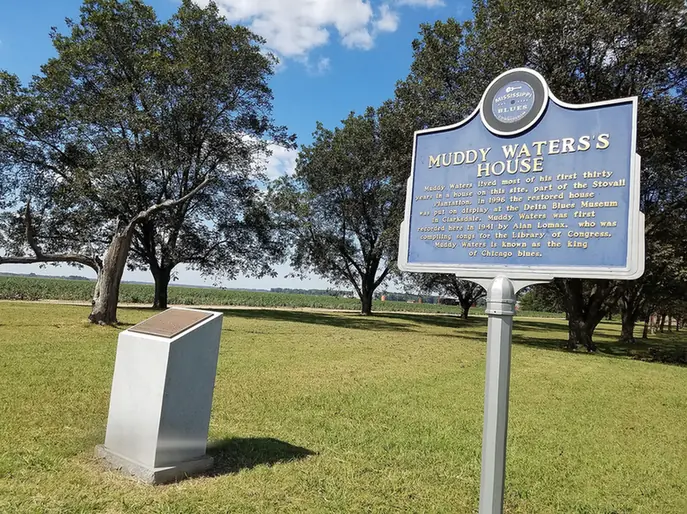
Stovall Farms
A few miles northwest of Clarksdale, where Muddy Waters drove a tractor and played Saturday night parties until 1941, when Alan Lomax recorded him for the Library of Congress. Two years later he left for Chicago. The cabin itself now sits inside the Delta Blues Museum, but the marker stands in the open fields where it was.
Leland and Highway 61
The Highway 61 marker tells how the road carried the music, and the people, north. Leland, on Deer Creek, also has the small Highway 61 Blues Museum, run by volunteers who will tell you about every player born within fifty miles.
Indianola
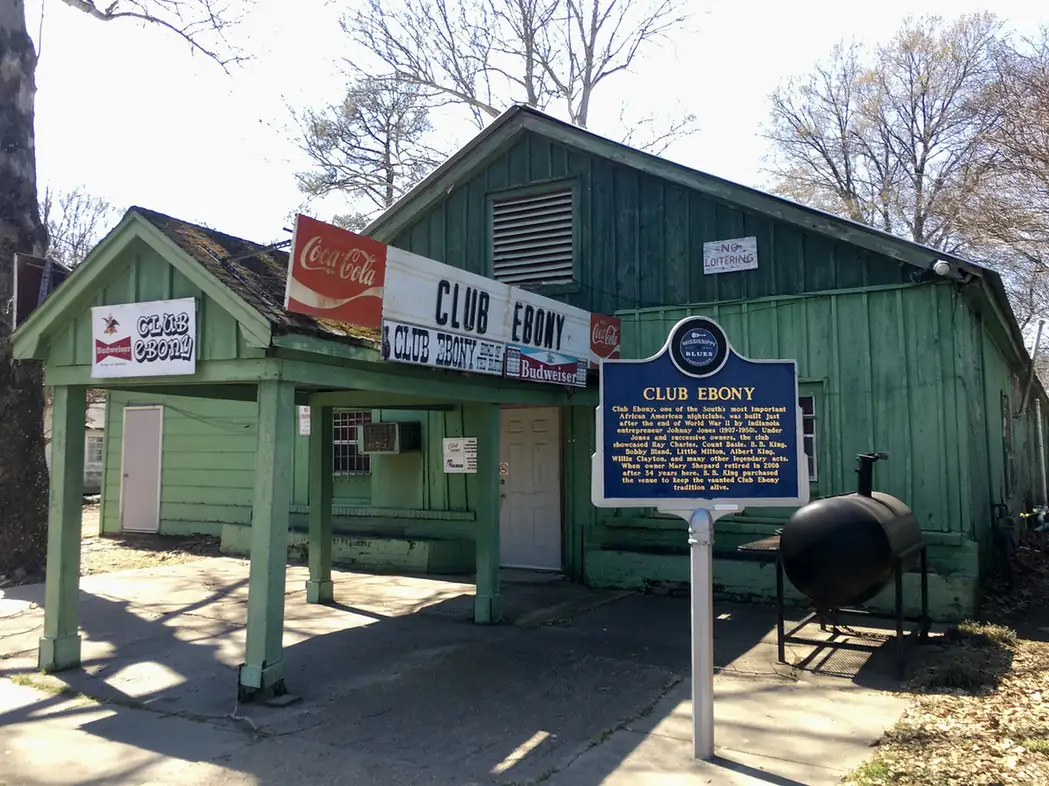
Two markers: one for B.B. King at the corner of Church and Second, where he played on the street as a young man, and one for Club Ebony, the club he played every year and later bought. The B.B. King Museum is a short walk away, and it is the best museum in the Delta.
How to read them
Each marker takes two minutes to read and an hour to understand. That is why we travel the trail with a guide, who fills in what the signs leave out. If you go alone, download the trail's map, give yourself more time than you think, and stay at least one night in Clarksdale for the music. Our Clarksdale guide has the clubs and the beds.